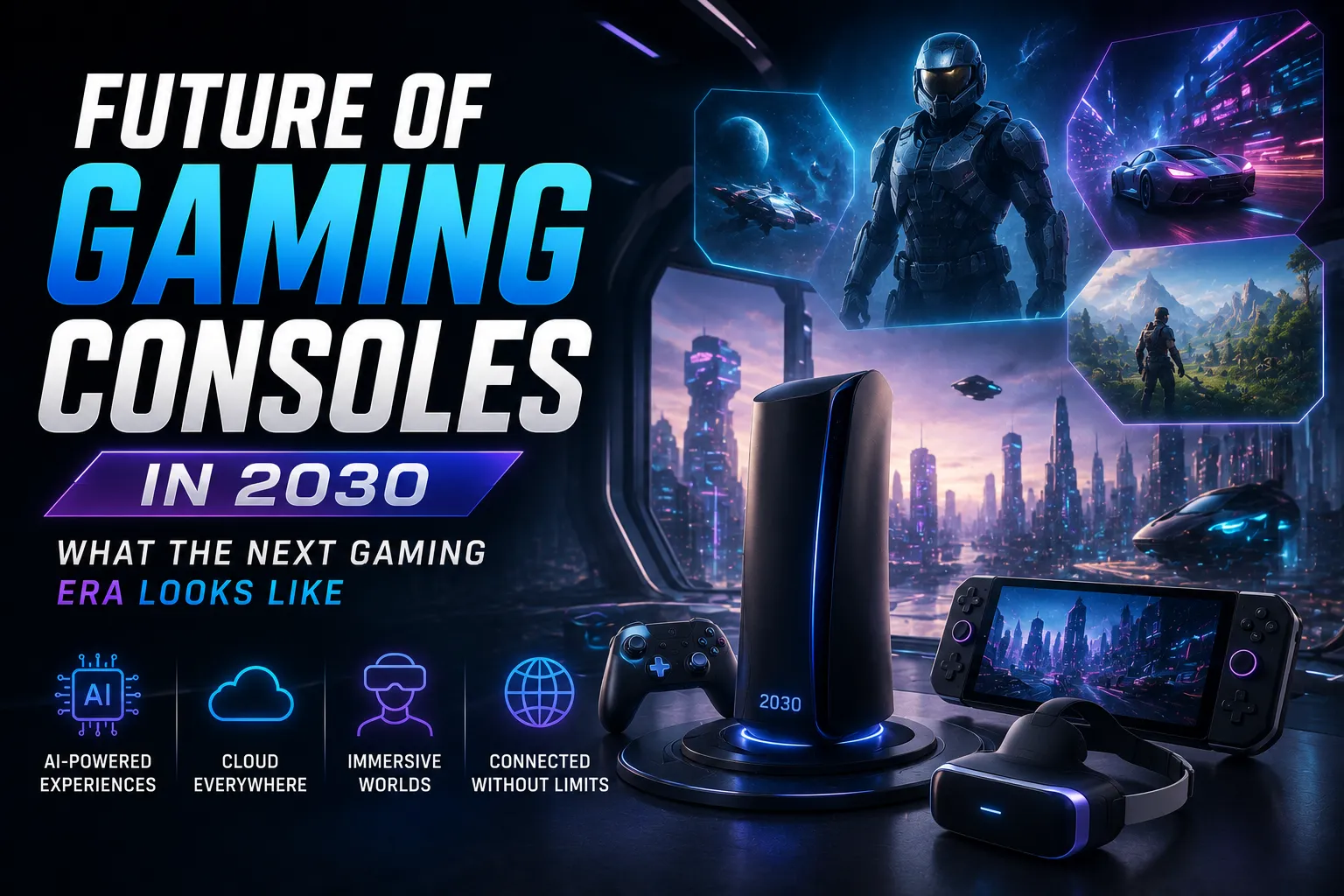
Gaming consoles have come a long way from simple cartridge-based systems to powerful machines capable of photorealistic graphics and massive online ecosystems. But the biggest transformation is still ahead.
By 2030, gaming consoles are expected to look and function very differently from what we use today. Instead of focusing only on hardware power, the future will revolve around cloud integration, artificial intelligence, and seamless cross-device gaming.
In this article, we will explore how gaming consoles may evolve by 2030 and what players can expect from the next generation of interactive entertainment.
What Will Define Gaming Consoles in 2030?
The Next-gen console of 2030 will not just be physical devices. They will be hybrid systems combining:
- Cloud computing power
- AI-driven performance optimization
- Ultra-fast internet connectivity
- Cross-platform ecosystems
The focus will shift from owning hardware to accessing gaming experiences anywhere.
AI Will Power Everything
Artificial intelligence will play a major role in shaping future consoles.
Smarter Gameplay Systems
AI will adapt game difficulty based on player skill in real time.
Dynamic Graphics Optimization
Consoles will automatically adjust resolution, lighting, and performance for the best experience.
Intelligent NPC Behavior
Non-playable characters will react more realistically, making games feel alive.
Cloud Gaming Will Dominate
By 2030, cloud gaming is expected to become a core part of console ecosystems.
No Heavy Downloads
Games will be streamed instantly from cloud servers.
Device Independence
Players can switch between TV, laptop, or mobile without losing progress.
Reduced Hardware Dependence
Consoles may become smaller, lighter, and less expensive.
Hardware Evolution
Even though cloud gaming will grow, hardware will still play an important role.
Ultra-Efficient Chips
Future processors will focus on energy efficiency and AI acceleration.
8K and Beyond
Consoles may support ultra-high resolutions with advanced upscaling.
Faster Storage Systems
Traditional SSDs will evolve into even faster memory technologies.
Real-World Gaming Experience in 2030
Imagine this:
You turn on your gaming system and instantly enter a fully immersive virtual world. The game adjusts itself based on your preferences, your skill level, and even your play style.
You switch from console to VR headset or mobile device without any interruption.
Gaming becomes less about devices and more about experiences.
Virtual Reality and Mixed Reality Integration
By 2030, VR and AR will likely become standard features in gaming ecosystems.
Full Immersion Gaming
Players will physically interact with game environments.
Mixed Reality Experiences
Real-world surroundings will blend with digital elements.
Advanced Motion Tracking
Movements will be tracked with extreme precision.
Challenges for Future Consoles
Despite exciting possibilities, several challenges remain:
- Internet infrastructure limitations in some regions
- High development costs for advanced games
- Privacy and data security concerns
- Balancing cloud and offline gaming
These issues will need to be addressed for global adoption.
Expert Insight
The future of gaming consoles is not about competing hardware specifications anymore. It is about building ecosystems where players can access games anytime, anywhere, on any device.
By 2030, consoles may evolve into full entertainment hubs powered by AI and cloud intelligence.
FAQ
1. Will consoles exist in 2030?
Yes, but they will likely be more cloud-based and less hardware-dependent.
2. Will physical consoles disappear?
Not completely, but they may become smaller and simpler.
3. Will cloud gaming replace consoles?
Cloud gaming will become dominant but not fully replace consoles.
4. What technology will shape future consoles?
AI, cloud computing, VR, and ultra-fast internet will be key drivers.
5. Will gaming be more expensive in the future?
It depends on subscription models, but access may become more flexible.
Conclusion
By 2030, gaming consoles will evolve into intelligent, cloud-connected entertainment systems rather than traditional hardware devices. With AI, VR, and streaming technologies advancing rapidly, the gaming experience will become more immersive, accessible, and flexible than ever before.
The future of gaming is not just powerful it is everywhere.